
’By Blocking Moldova One Does Not Help Ukraine’ — The Maia Sandu Exclusive

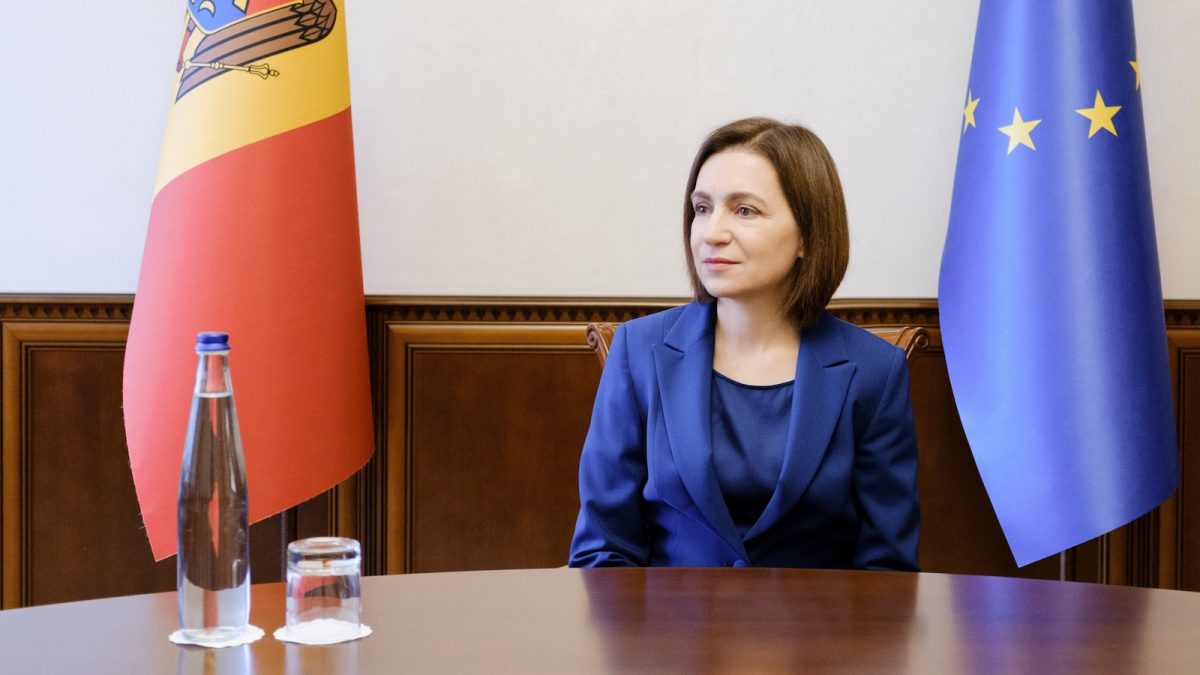
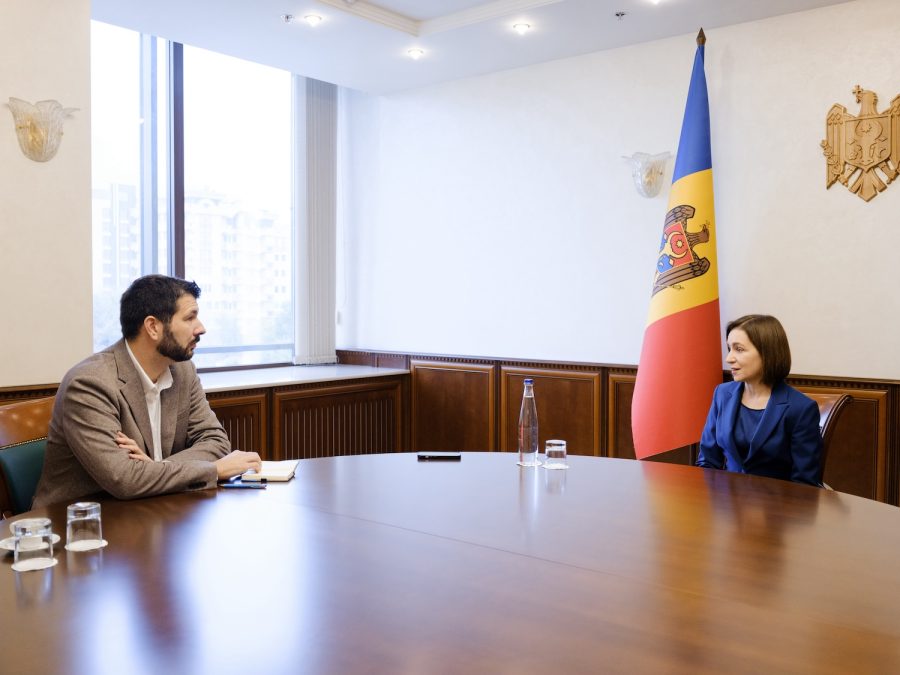
‘We had to dismantle the corrupt system and deal with a captured state. Hungary probably faces similar elements. (…) One needs to move fast and in all the domains because the captured system might regroup, if you give them time’, Maia Sandu explains in an exclusive interview with Válasz Online. The President of Moldova — in office since 2020 and a guest of honor at events held in Budapest on October 23 — discusses not only the parallels between the pro-Western political shifts of both nations but also how to navigate the impasse created by the Hungarian government’s policies regarding Ukraine. Since both post-Soviet states were granted EU candidate status simultaneously in 2022, Budapest’s stance has also negatively impacted Moldova’s own path toward EU accession. What advice did she offer Péter Magyar in Budapest? Would Moldova still exist today had Ukraine not resisted the Russian advance? How should one deal with Russian propaganda? Can Moldova become an EU member without resolving the issues posed by separatist Transnistria and the Autonomous Territorial Unit of Gagauzia? Why did she state that she would support unification with Romania in a referendum? Do Western leaders grasp the gravity of the security situation in the region? Find the answers in our exclusive interview, conducted at the Presidential Palace in Chisinau.
On the occasion of the 70th anniversary of the 1956 Hungarian revolution, you paid a visit to Budapest. How was it?
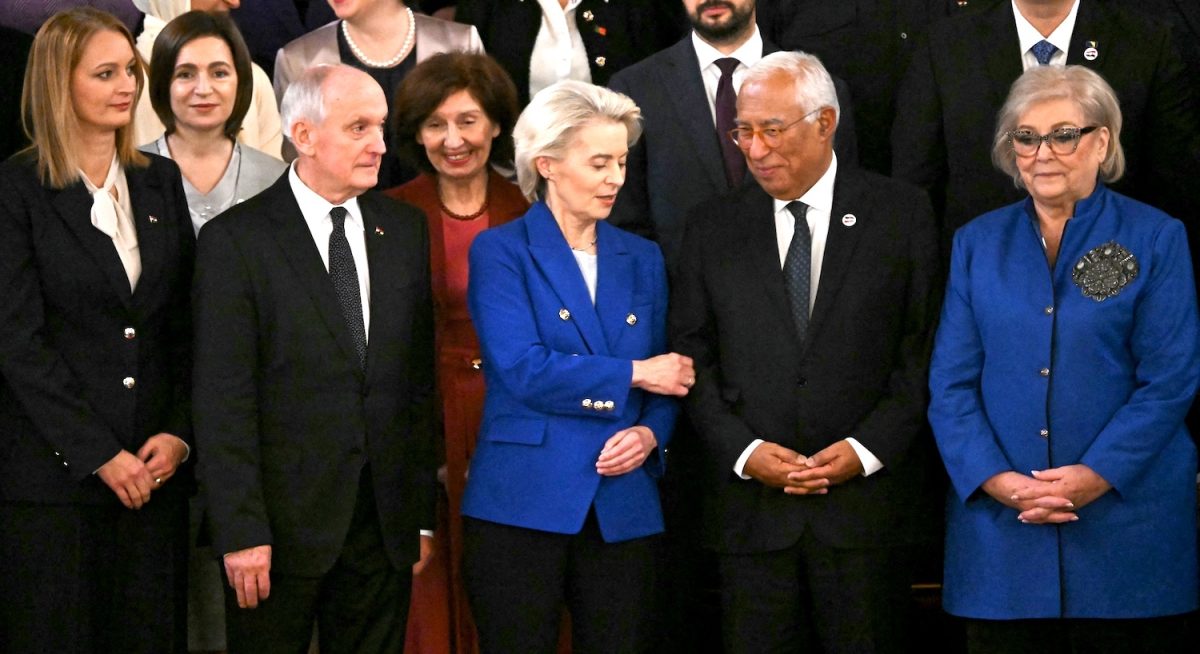
It was a very good visit. It was an honor to celebrate Liberty together with Hungarians and to commemorate the heroes of the 1956 events. We do understand these events because Moldova also suffered under the Soviet regime. We were denied to speak our language. We were denied to use our Latin script. Our people were deported and starved and we had no freedom and democracy. I do believe that memory is building resilience while Russians are trying to rewrite and repeat history. We therefore need to resist and we need to resist together. As for the anniversary, I had very good meetings with President Baka and Prime Minister Magyar. We did talk about the bilateral cooperation. Moldova and Hungary have signed a strategic partnership back in 2020, but frankly not much has happened over the last few years. Therefore we have discussed what can be done to increase our trade and economic cooperation — and of course we talked about the EU enlargement as an important issue for Moldova.
Did you get to know about the anniversary’s details over the very last days, as Euronews reported?
We were informed about the events we were recommended to attend, including the speech of the Prime Minister outside the Parliament, a couple of days before. We did not have issues about an unclear agenda.
How much of a relief was it for you when you learned the results of the Hungarian election on the 12th of April?
We have been following the impressive election campaign and were happy to see the results. The participation of Hungarians in the election was also very impressive thus it was a good development for our region.
We went through a similar situation back in 2021 when we got to power: after a difficult campaign, we had to begin our work right away, having understood that the window of opportunity was narrow. We had to dismantle the corrupt system and deal with a captured state. Hungary probably faces similar elements.
The paralel is, in fact, striking. Both you and Mr. Magyar has managed to build a popular movement from scratch; you both had to defeat regimes that, according to their critics, were corrupt and oligarchic; and you both deal with hardships to fill up the ranks in ministries — let alone judicial institutions — with competent public servants. Have you shared your best practices?
I believe that Hungary is in a much better position because it has stronger institutions and a much stronger economy. But, based on our experiences, one needs to move fast and in all the domains because the captured system might regroup, if you give them time. One has to focus both on dismantling the corrupt and captured system but also on development because people want to see where the country is going. This is not easy, especially in the midst of energy and security crises. It is not easy to deliver the rapid increase of people’s living standards either. And the most difficult reforms have to be done at the beginning of the mandate because later on it is difficult to start on reforms. It is also difficult to find the right people to rebuild the civil service which has been damaged by previous governments, which not necessarily respected democracy.
hirdetés
Have you shared any of these advises with Mr. Magyar?
We did talk a bit about Moldova’s experience and about the challenges Hungary is facing.
Have you had any advises on Hungary’s behavior on Ukraine, that hinders Moldova’s EU membership ambitions to the same extent?
I would like people to understand how crucial it is for Ukraine to resist and to defend its sovereignty. But this is not just about Ukraine — it is also about peace in our region and the security of our people. And for Ukraine to resist, we need to support them. I know that the propaganda has made a lot of damage — not just in Hungary, but in Moldova too. We see people who are blaming the victim of a war that Russia is waging against Ukraine. If we do not support Ukraine, the very bad things that are happening today there might happen tomorrow to us and the day after tomorrow to countries which are not that close to Russia but are still in this region. If Russia’s aggression remains unpunished, our people’s safety is going to be in danger. I do believe we all need to do a better job in tackling this propaganda coming from Russia, which is trying to justify the war and suggests that Ukraine does not want peace.
Which is crazy. Peace is what Ukrainians — the very people who are being bombarded every single day — want most. But it is not up to them; it is for Russia to stop this war.
Therefore every single citizen in our countries must understand what is really happening and that we need to stop the aggressor. For that to happen, we need to continue to help Ukraine.
Had you raised this point to Mr. Magyar, he might have replied that his hands were tied due to the impact of his predecessor’s anti-Ukraine propaganda.
I am not saying that this is easy. I am just saying that we all need to become much better in tackling this, in fighting the cognitive war and in understanding where our interests are. And our interests are with Ukrainians resisting and defending their land to have Russians return beyond their country’s borders. I am sure — and we have already seen it — that the new government in Hungary has been criticizing the Russian aggression and has been expressing its support to Ukraine. I have no questions about that. What I am saying is that because of the previous propaganda, it is more difficult to tackle the issue.
When it comes to EU integration, was it your impression that Mr. Magyar understands that with Hungary’s behavior on Ukraine, Moldova suffers too?
We did raise the issue. We want the last two clusters to be opened, which, according to the Commission, both countries are technically ready for. I understand that Hungary is working with the Ukrainian government on bilateral issues and we do hope to see a positive decision by all member states for both countries in the next few months. We support a merit-based process and not asking for shortcuts.
Have you got an outright promise in Budapest?
No, we haven’t discussed timelines, but I hope at this year’s last Council meeting we will have a positive decision.
Had the Ukrainian resistance failed in Mykolaiv and Odesa, your very existence and statehood would have been at stake — is it a fair characterization of the events of early 2022?
It is clear that Russia’s imperialism does not stop in Ukraine. Therefore if they had got to our borders or to the borders of other countries, they would have tried to move forward.
Nonetheless, has it ever crossed your — or any other Moldovan leader’s — mind that, due to the challenges Ukraine is facing, Moldova should somehow get on a faster EU integration track?
We do want Ukraine to become part of EU. It is in our strategic interest to be surrounded by EU member states. We do understand how difficult it is for Ukraine to implement all these reforms, especially when bombs are falling on their institutions and their people. At the same time, we cannot solve the internal issues of Ukraine, just as Ukraine cannot implement reforms in Moldova.
I really want all the candidate countries to move faster, according to the rules, but at the same time, I believe that by blocking Moldova one does not help Ukraine.
We are trying to keep Moldova on the right side of history and keep it democratic and this is why the EU integration is so important for us. We are a small country, and yet, in 2025 alone Russia spent 2 per cent of our GDP to interfere with our democratic processes. We have resisted so far, but if we do not show success towards EU integration, despite the efforts we have been making, it is going to be easier for Russia to promote its narratives in the future. We want to preserve our sovereignty and our democracy, but we also want to remain friendly towards Ukraine. But if we do not succeed in our EU integration and resilience against Russia, this becomes risky then.
While it is true that no Moldovan leader has ever mentioned decoupling publicly, there is clearly something in the air as over the last EU summit in Brussels Ukrainian president Zelenskyy said ‘it would be morally wrong to split us apart on our way into the EU’.
We want the Council’s vote for both countries to move as fast as possible. But we cannot influence the events in Ukraine. In the end, we have to solve our own issues, and we have to move at the pace we can.
With or without Ukraine?
I am responsible for the progress of this country. And again, by blocking Moldova, one is not helping Ukraine.
How wide do you think your window of opportunity is? Elections are ahead in key EU member states and if one looks at the results of your EU referendum in 2024, it is clear that Moldovans are still in a 50-50 sentiment.
When the referendum was announced, the polls showed much higher support for the EU integration. This is just an example of how much damage Russian propaganda is able do to an idea. They have managed to scare a lot of people by lying and promoting false narratives about the EU. But the current polls indicate a much better situation than what the referendum showed. As there is full political support in the parliament, in the government and in the presidency — and the current EU Commission is also committed —, the window of opportunity is open and we are hoping not to lose it. We also see the member states supporting the enlargement. But things might change. We are aware of that and that is why we are working this hard to deliver on all clusters. To move forward however, we need the negotiations to be formally opened.
Is Moldovan EU membership possible without resolving the issue of Transnistria and Gagauzia?
Gagauzia is not an issue…
… they might easily jeopardize the procedure with a local referendum…
… not really. Gagauzia is an autonomy where lower support of EU integration is also the effect of Russian propaganda. We are working hard to help them preserve their own language, culture and identity by limiting Russian propaganda. It is not going to happen overnight. Younger and business people however do understand that it is better for Moldova to be part of the EU. But Gagauzia cannot determine the decision of the entire country. Transnistria is different because it is not controlled by our constitutional authorities. Things are changing there since the war has started in Ukraine — the economic situation has been worsening, Russia has been providing less support, therefore
an increasing number of people are coming to the rest of Moldova to work and to take the citizenship of the Republic of Moldova because they feel that it is safer than being the citizen of Russia or the so-called Transnistrian region.
We have also been making steps towards the economic reintegration. We are very committed to a peaceful resolution, but of course the biggest impediment continues to be the illegal presence of Russian troops. We have to solve this issue to be able to start the political resolution of the conflict. We are working on it, we are consulting the EU and working with the member states.
With regards to Russia, was the deterioration of your bilateral relationship a necessity after February 2022? Even in August 2021, Mr. Putin’s then deputy chief of staff, Dmitry Kozak was in Chisinau to conduct ‘friendly and constructive’ discussion with you.
Less than a month after Mr. Kozak’s visit, Moldova faced another energy blackmail by Russia. There were no illusions that things would change. And when the war started, it was clear for us that we cannot support the aggressor — we have to be on the part of Ukraine and on the part of the world that respects the international rules-based system. What Russia has been doing to Ukrainians is something Moldovans cannot accept. In addition, Moldovans are also experiencing the hybrid war, which does not compare to the suffering of the Ukrainian people, but which are clear indications that Russia does not respect Moldova’s sovereignty as it wants to control Moldova and use it against Ukraine. Imagine if today we had a Russian-controlled government in Moldova, a country that shares a border of 1200 kilometers with Ukraine — how much damage Russia could have done to Ukraine by using our country? By preserving our sovereignty and by not allowing Russia to interfere with our internal processes, we are also contributing to the region’s stability.
Over your discussions with Western leaders, have you experienced at least a gradual realization process about the severity of the situation in this region?
Most leaders underestimated the risk of the Russian aggression, especially in the first years. They underestimated the risk that Russia’s economy would transform into a military economy and that Russia would start innovating at some point and becoming even more dangerous to the continent. I believe
Ukraine should have received more support, especially in the first two years of the war. With that, probably it could have been easier to stop the Russian aggression
— now it is more difficult and costly, both in terms of human lives in Ukraine, but in financial means for those countries which are helping Ukraine. Most leaders now understand how dangerous Russia is, but it is not enough to have the right understanding of the situation, solutions are needed too. And those are not easy. They are costly and might be politically difficult to implement. But, in my view, there is no other way to bring this war to an end than to put more economic pressure on Russia and help Ukraine more.
A few months ago, interviewed by the British podcast The Rest Is Politics, you said that if there was a referendum announced on the matter, you would support Moldova’s unification with Romania. Quite a striking statement.
I want my country to be safe and I want my country to be free. Imagine if Russia comes closer to your borders — you have to look for solutions even though they might look strange to you. As of now, we do not have enough popular support for this solution. We do have a majority of support for the EU integration and that is why we are pursuing it with such passion.
As the northeastern region of Romania, Moldova would be free?
With regards to sovereignty, it is a different discussion, but Romania is a democratic country compared to Russia and citizens in Romania are free, which one cannot say about Russia.
Let me ask you something slightly personal! Is it your public persona — a reserved and calm politician who rarely exposes herself in foreign media — that prevents your Western colleagues criticizing you? For instance, no one has ever raised the question who was responsible for the bomb threat on a Dniester bridge that physically deprived Transnistrian voters — a predominantly anti-Maia Sandu group of citizens — from casting their ballots in the runoff of the 2024 presidential election.
The Russians have been able to bribe voters on the right bank of the Dniester, where Moldovan authorities control the situation and can at least see what is happening. Can you imagine what Russia was trying to do on the left bank of the river where the separatist regime does not even allow politicians from the right bank to go and campaign there and where the Moldovan media is not allowed to broadcast? I remember in 2020, when I was running for president for the second time, I went to some of the polling stations on the right bank, but where people from the left bank were coming to vote. I asked them, who the candidates were — and they did not know, even if it was the future winner who was asking them. It is a serious discussion on democracy, but it is not our fault that there is a Russian-controlled separatist regime in Transnistria which is interfering with our elections.
We are fully committed to democratic principles, but we have to make sure that it is the Moldovans who are making a decision, and not the Russians with their money.
As for the opinions of Western leaders, the lack of criticism is probably a consequence to the fact that although Moldova is a small country that is going through difficult challenges, over the past years, our people have been supporting Ukrainians. I think it has showed the world our solidarity and our resilience as well as the courage not to be afraid of Russia and to continue to stay on the right side of history. We are also implementing a number of reforms — often very unpopular ones — and in just 5 years we cut our 100% dependency on Russian gas to zero while raised the percentage of renewables from 3 to 25%. All these might have created an image that helped us getting support from a number of European partners.
Having entered to the mainstream of Moldovan politics 10 years ago, I wonder where do you see yourself and Moldova in 10 years?
I want to see Moldova in the EU, all the more so because the coming decade is going to be full of uncertainty, and the world is going to look even more complicated and maybe even dangerous for small countries like Moldova. For us, EU integration is the survival strategy to prevail as a democratic country and to be part of a family where we will also be safer, not just more developed and more modernized. As for myself, I hope to be out of politics by a decade from now.
Cover picture: Maia Sandu gives an interview to Válasz Online at the Presidential Palace in Chisinau on October 29, 2026 (photo by Igor Turcan/Presidency of the Republic of Moldova)